
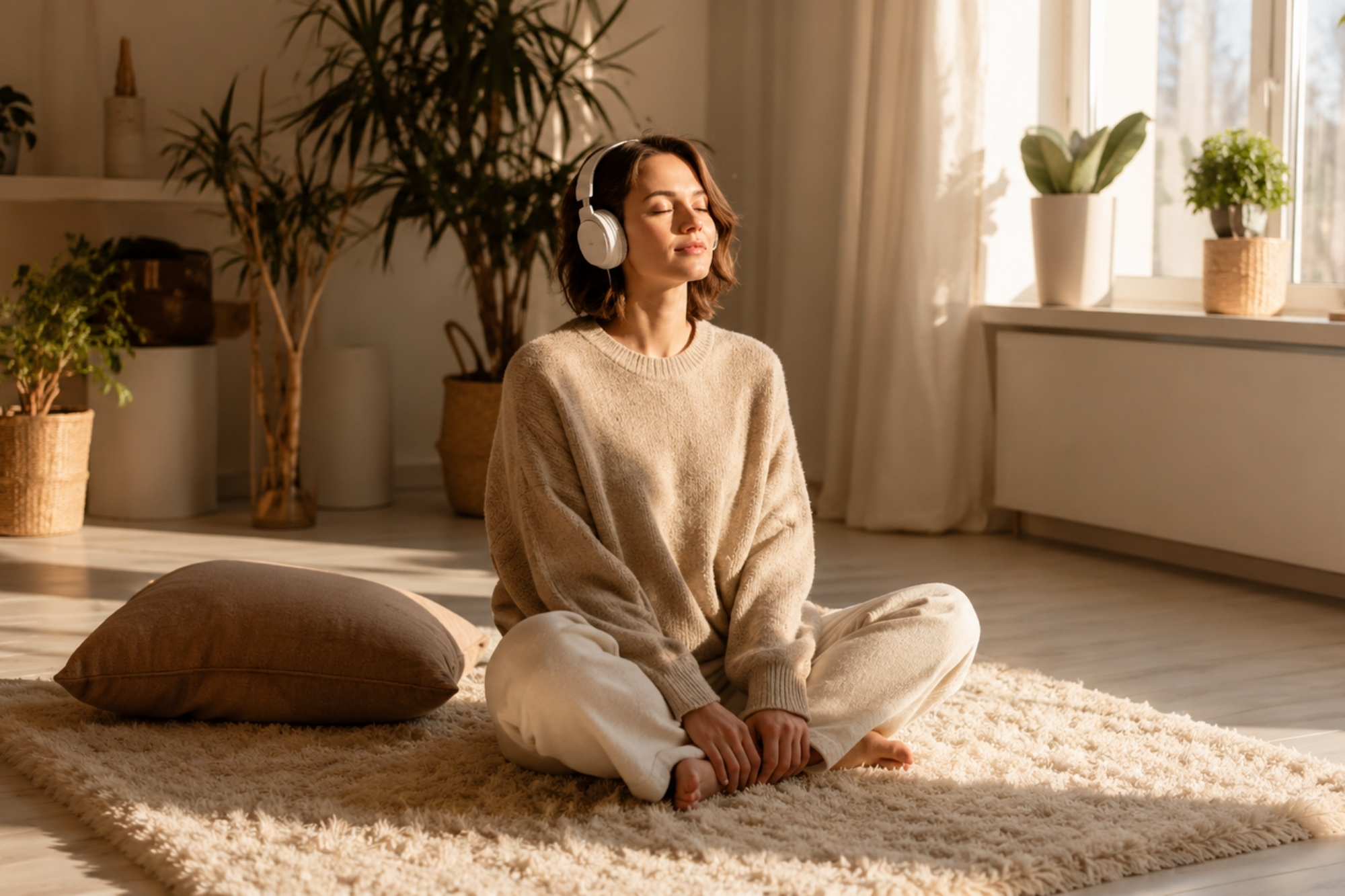
Reduce overthinking anxiety by treating it as a nervous-system loop, not a personal flaw. When your mind keeps replaying conversations, predicting disasters, or checking every possible outcome, it can feel like thinking harder should solve the problem.
But it usually doesn’t. Overthinking often keeps the brain in alert mode. The body reacts as if there is danger nearby, even when the “threat” is a thought, a memory, or an imagined future. That is why calming a racing mind needs both mental tools and physical resets.
Why Overthinking Feels So Hard to Stop
Overthinking becomes exhausting because it pretends to be useful.
It says, “Just review this one more time.”
It says, “Prepare for every outcome.”
It says, “You’ll feel safe once you solve it.”
But chronic rumination rarely gives real relief. It usually creates more anxiety, more tension, and less clarity. The American Psychological Association describes perseverative thinking as repetitive thinking that can keep distress going, and therapy approaches often target this loop directly.
That matters in daily life. A racing mind can affect sleep, focus, decision-making, relationships, and work performance. It can make small tasks feel heavy. It can also make rest feel impossible because your brain keeps running after your body has stopped.
Reduce Overthinking Anxiety by Naming the Loop
The first step is not to argue with the thought.
Name it. Instead of saying, “This will go wrong,” try, “I am having the thought that this might go wrong.” That small shift creates distance. It helps you see the thought as a mental event, not a fact.
This is one of the simplest CBT tools for overthinking. CBT, or cognitive behavioral therapy, helps people notice the link between thoughts, feelings, and actions, then respond in more helpful ways. NHS guidance also includes self-help CBT techniques such as worry time for managing stress and anxiety. Short sentence. Big difference.
Use Grounding to Return to the Present
When anxiety rises, the mind moves into “what if” mode. Grounding brings it back to “what is.”
Try the 5-4-3-2-1 method. Notice five things you can see, four things you can feel, three sounds you can hear, two things you can smell, and one taste in your mouth.
This technique works because it gives the brain real-time sensory information. Cleveland Clinic explains that grounding techniques can help calm anxiety by focusing attention on the present moment. It’s simple. That’s the point.
Somatic Exercises for Anxiety
Sometimes logic does not work because the body is already activated. That is when somatic exercises for anxiety help. “Somatic” means body-based. These tools calm the physical stress response before you try to think your way through the problem.
A useful starting point is the physiological sigh: take two short inhales through the nose, then one long, slow exhale through the mouth. Repeat three to five times. You can also splash cool water on your face, unclench your jaw, drop your shoulders, or press your feet firmly into the floor. The body often calms before the mind believes it is safe.
Reduce Overthinking Anxiety With Worry Time
Reduce overthinking anxiety by giving worry a container.
Set one 15-minute window each day for worries. Write them down. Be specific. Then stop when the timer ends. When the same thoughts appear earlier in the day, tell yourself, “Not now. That goes in worry time.” This does not suppress the thought. It delays it and teaches the brain that worry does not get unlimited access.
NHS Every Mind Matters also suggests daily worry time as a way to manage concerns when anxiety starts taking over the day. This works best when done consistently.
Challenge the Catastrophe
Overthinking often jumps to the worst possible outcome.
So slow it down. Ask three questions: What is the worst realistic outcome? What is the most likely outcome? What would be the next practical step if things did go wrong?
This is how to quiet mental chatter without pretending everything is fine. You are not forcing positivity. You are adding accuracy. Cleveland Clinic notes that catastrophizing can increase stress and anxiety, and grounding or breathing techniques can help bring attention back to the present. The aim is balance, not denial.

Quick Reset Tools for a Racing Mind
Use these when thoughts start speeding up:
- Label the thought as “rumination” or “worry.”
- Do one full 5-4-3-2-1 sensory scan.
- Take three physiological sigh breaths.
- Write the worry in one sentence only.
- Ask, “What is the next small action?”
- Stand up and change rooms.
- Do one two-minute task, like washing a cup.
- Put the phone away if scrolling is feeding the loop.
Small action interrupts mental spinning.
Shift From Why to How
“Why am I like this?” usually makes anxiety worse.
Try “How can I handle the next five minutes?” instead.
That question is kinder and more useful. It brings attention to the present task, not your entire identity. Overcoming chronic rumination often means replacing big, unanswerable questions with small, answerable actions. The mind wants certainty. Life rarely gives it. But you can build steadiness.
When Overthinking Needs Extra Support
Self-help tools can work well for mild to moderate worry. But get professional support if anxiety affects sleep, appetite, work, relationships, or daily functioning for several weeks.
Also seek urgent help if you feel unsafe or have thoughts of self-harm. Overthinking is not a formal diagnosis by itself, but Cleveland Clinic notes it can be a symptom of anxiety or depression. Getting help early can prevent the loop from becoming your normal setting.
Conclusion
Reduce overthinking anxiety by using both the mind and body. Label the thought, ground yourself through the senses, breathe slowly, schedule worry time, challenge catastrophic thinking, and move toward one small action. These tools work because they interrupt the loop instead of feeding it. Learning how to stop overthinking and reduce anxiety is not about becoming a person who never worries. It is about noticing the spiral sooner, calming the body faster, and choosing a response that gives your mind less noise and more room to breathe.